Posts

Showing posts with the label lawrence county

Lawrence County, Missouri
Image
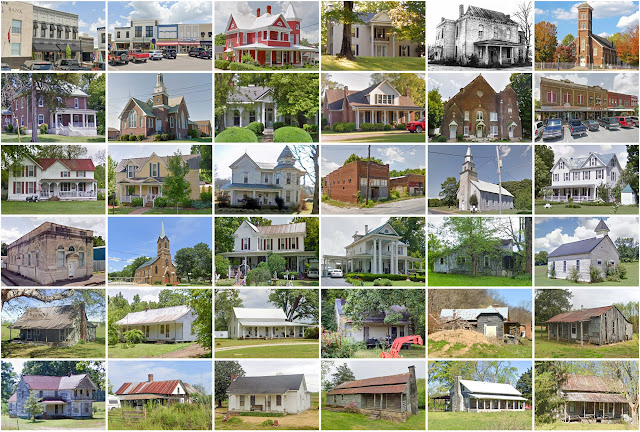
Founding:  1845 (declared in 1843) Parent counties:  Barry and Dade Namesake:  James Lawrence, U.S. naval officer Seat:  Mount Vernon (1845–) Land area:  612 square miles Population (2020):  38,001 Population (historic):  4,859 (1850); 12,977 (1870); 26,228 (1890); 26,583 (1910); 23,774 (1930) Periods of population growth:  pre-1850–1900; 1930s; 1960–2010 Subdivisions:  Eight cities; three villages; one CDP; 14 townships Pre-1940 residences (estimated):  2,669 (16%) Pre-1940 housing survival rate:  44.6% Pre-1860 housing survival rate (1940):  1.8% Farm housing in disrepair (1950):  10.5% Nonfarm housing in disrepair (1950):  6.7% Average farmhouse value (1930):  $971 Average outbuilding value (1930):  $690 Average farmhouse size (1940):  4.9 rooms Number of farms (1920):  2,979 Average farm size (1920):  94.3 acres Sources of settlement:  Missouri, Tennessee, Illinois, Kentucky, and Indi...

Lawrence County, Illinois

Image
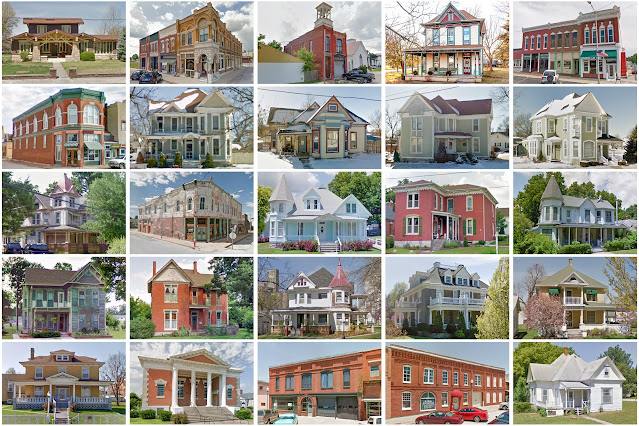
Founding:  1821 Parent counties:  Crawford and Edwards Namesake:  James Lawrence, U.S. naval officer Seat:  Lawrenceville (1821–) Land area:  372 square miles Population (2020):  15,280 Population (historic):  3,668 (1830); 6,121 (1850); 12,533 (1870); 16,523 (1900); 21,885 (1930) Periods of population growth:  pre-1830–1840; 1850–1910; 1920s; 1970s; 2000s Subdivisions:  Four cities; one village; nine townships Pre-1940 residences (estimated):  2,067 (29.1%) Pre-1940 housing survival rate:  36.9% Pre-1860 housing survival rate (1940):  3.9% Farm housing in disrepair (1950):  19.8% Nonfarm housing in disrepair (1950):  13.5% Average farmhouse value (1930):  $1,012 Average outbuilding value (1930):  $842 Average farmhouse size (1940):  5.2 rooms Number of farms (1920):  1,710 Average farm size (1920):  105.6 acres Sources of settlement:  Indiana, Ohio, and Kentucky ...

Lawrence County, Tennessee

Image
Founding:  1817 Parent county:  Hickman Namesake:  James Lawrence, U.S. naval officer Seat:  Lawrenceburg (1819–) Land area:  617 square miles Population (2020):  44,159 Population (historic):  3,271 (1820); 9,280 (1850); 7,601 (1870); 15,402 (1900); 26,776 (1930) Periods of population growth:  pre-1820–1860; 1870–1950; 1960–2020 Subdivisions:  Four cities; one town; one CDP Pre-1940 residences (estimated):  1,372 (7.5%) Pre-1940 housing survival rate:  26.9% Pre-1860 housing survival rate (1940):  6.2% Farm housing in disrepair (1950):  30.4% Nonfarm housing in disrepair (1950):  19% Average farmhouse value (1930):  $427 Average outbuilding value (1930):  $226 Average farmhouse size (1940):  3.9 rooms Number of farms (1920):  3,590 Average farm size (1920):  33.6 acres _________________________________________________________________________________ Lawrenceburg ...

Lawrence County, Kentucky

Image
Founding:  1821 Parent counties:  Floyd and Greenup Namesake:  James Lawrence, U.S. naval officer Seat:  Louisa (1822–) Land area:  416 square miles Population (2020):  16,293 Population (historic):  3,900 (1830); 7,601 (1860); 13,262 (1880); 19,612 (1900); 16,713 (1930) Periods of population growth:  pre-1830–1910; 1930s; 1970s; 1990–2020 Subdivisions:  Two cities Pre-1940 residences (estimated):  506 (6.9%) Pre-1940 housing survival rate:  18.1% Pre-1860 housing survival rate (1940):  5% Farm housing in disrepair (1950):  24.4% Nonfarm housing in disrepair (1950):  23% Average farmhouse value (1930):  $465 Average outbuilding value (1930):  $196 Average farmhouse size (1940):  4.8 rooms Number of farms (1920):  2,616 Average farm size (1920):  58 acres _________________________________________________________________________________ Louisa Namesake:  Unce...

Lawrence County, Indiana

Image
  Founding:  1818 Parent county:  Orange Namesake:  James Lawrence, U.S. naval officer Seat:   Palestine (1818–1825); Bedford (1825–) Land area:  449 square miles Population (2020):  45,011 Population (historic):  4,116 (1820); 12,097 (1850); 14,628 (1870); 25,729 (1900); 35,583 (1930) Periods of population growth:  pre-1820–1910; 1920s; 1950–2010 Subdivisions:  Two cities; one town; two CDPs; nine townships Pre-1940 residences (estimated):  3,857 (18.3%) Pre-1940 housing survival rate:  47.7% Pre-1860 housing survival rate (1940):  12.9% Farm housing in disrepair (1950): 14.7% Nonfarm housing in disrepair (1950): 12% Average farmhouse value (1930):  $1,047 Average outbuilding value (1930):  $588 Average farmhouse size (1940):  4.5 rooms Number of farms (1920):  2,332 Average farm size (1920):  68.7 acres Sources of settlement:  Kentucky, North Carolina, and Tennessee __...

Lawrence County, Pennsylvania

Image
Founding:  1849 Parent counties:  Beaver and Mercer Namesake:  James Lawrence, U.S. naval officer Seat:  New Castle (1849–) Land area:  358 square miles Population (2020):  86,070 Population (historic):  21,079 (1850); 33,312 (1880); 57,042 (1900); 97,258 (1930) Periods of population growth:  pre-1850–1930; 1940–1960 Subdivisions:  One city; ten boroughs; seven CDPs; 16 townships Pre-1940 residences (estimated):  12,571 (30.5%) Pre-1940 housing survival rate:  54.4% Farm housing in disrepair (1950):  10.7% Nonfarm housing in disrepair (1950):  7% Average farmhouse value (1930):  $2,203 Average outbuilding value (1930):  $1,607 Average farmhouse size (1940):  6.2 rooms Number of farms (1920):  2,464 Average farm size (1920):  53.4 acres _________________________________________________________________________________ New Castle Namesake:  Uncertain—likely Newcastl...

Lawrence County, Ohio

Image
Founding:  1817 (declared in 1815) Parent counties:  Gallia and Scioto Namesake:  James Lawrence, U.S. naval officer Seats:  Burlington (1817–1851); Ironton (1851–) Land area:  453 square miles Population (2020):  58,240 Population (historic):  3,499 (1820); 23,249 (1860); 39,068 (1880); 39,534 (1900); 44,541 (1930) Periods of population growth:  pre-1820–1890; 1920–1980; 1990–2010 Subdivisions:  One city; six villages; one CDP; 14 townships Pre-1940 residences (estimated):  3,669 (13.4%) Pre-1940 housing survival rate:  34.7% Pre-1860 housing survival rate (1940):  8.4% Farm housing in disrepair (1950):  21.7% Nonfarm housing in disrepair (1950):  14.4% Average farmhouse value (1930):  $900 Average outbuilding value (1930):  $557 Average farmhouse size (1940):  4.9 rooms Number of farms (1920):  2,430 Average farm size (1920):  52.8 acres Sources of settlement: ...