Posts

Showing posts with the label vermont

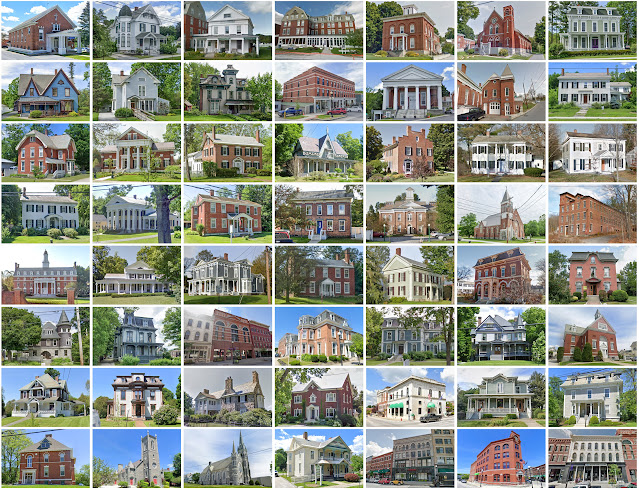
Washington County, Vermont

Image
Founding:  1811 (declared in 1810) Parent counties:  Caledonia, Chittenden, and Orange Namesake:  George Washington, U.S. president Seat:  Montpelier (1811–) Land area:  687 square miles Population (2020):  59,807 Population (historic):  14,113 (1820); 24,654 (1850); 26,520 (1870); 36,607 (1900); 41,733 (1930) Periods of population growth:  pre-1820–1860; 1880–1910; 1920s; 1940–2020 Subdivisions:  Two cities; one village; 12 CDPs; 18 towns Pre-1940 residences (estimated):  8,867 (28.9%) Pre-1940 housing survival rate:  85% Pre-1860 housing survival rate (1940):  37.1% Farm housing in disrepair (1950):  10.2% Nonfarm housing in disrepair (1950):  5.2% Average farmhouse value (1930):  $1,555 Average outbuilding value (1930):  $1,315 Average farmhouse size (1940):  7.4 rooms Number of farms (1920):  2,564 Average farm size (1920):  41.6 acres __________________________________...
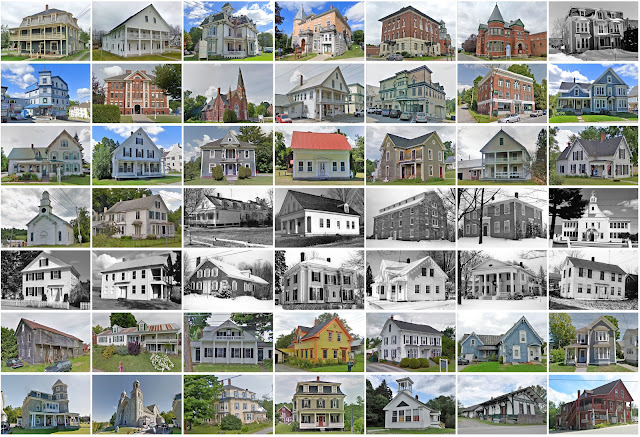
Caledonia County, Vermont

Image
Founding:  1796 (declared in 1792) Parent county:  Orange Namesake:  A poetic reference to the country of Scotland Seat:  Danville (1796–1856); St. Johnsbury (1856–) Land area:  649 square miles Population (2020):  30,233 Population (historic):  9,377 (1800); 21,891 (1840); 22,235 (1870); 24,381 (1900); 27,253 (1930) Periods of population growth:  pre-1800–1810; 1820–1850; 1860–1880; 1890–1910; 1920s; 1970–2010 Subdivisions:  Two villages; 11 CDPs; 17 towns Pre-1940 residences (estimated):  5,231 (32.7%) Pre-1940 housing survival rate:  74.9% Pre-1860 housing survival rate (1940):  34.2% Farm housing in disrepair (1950):  12.8% Nonfarm housing in disrepair (1950):  6.9% Average farmhouse value (1930):  $1,404 Average outbuilding value (1930):  $1,311 Average farmhouse size (1940):  7.5 rooms Number of farms (1920):  2,313 Average farm size (1920):  56.2 acres ______________...

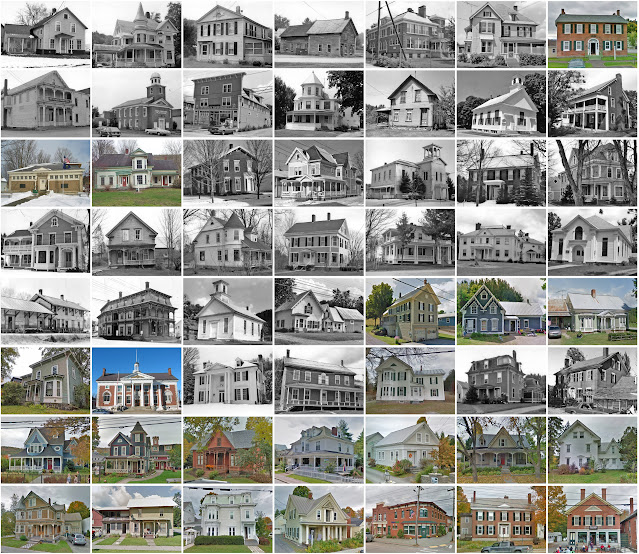
Rutland County, Vermont

Image
Founding:  1781 Parent county:  Bennington Namesake:  The city of Rutland Seat:  Tinmouth (1781–1784); Rutland (1784–) Land area:  930 square miles Population (2020):  60,572 Population (historic):  15,590 (1790); 30,699 (1840); 40,651 (1870); 44,209 (1900); 48,453 (1930) Periods of population growth:  pre-1790–1830; 1840–1890; 1900s; 1920s; 1940–2000 Subdivisions:  One city; one village; 18 CDPs; 27 towns Pre-1940 residences (estimated):  10,826 (31.9%) Pre-1940 housing survival rate:  81.9% Pre-1860 housing survival rate (1940):  36.3% Farm housing in disrepair (1950):  9.7% Nonfarm housing in disrepair (1950):  5.8% Average farmhouse value (1930):  $2,133 Average outbuilding value (1930):  $1,684 Average farmhouse size (1940):  8.1 rooms Number of farms (1920):  2,649 Average farm size (1920):  62.4 acres __________________________________________________________________...
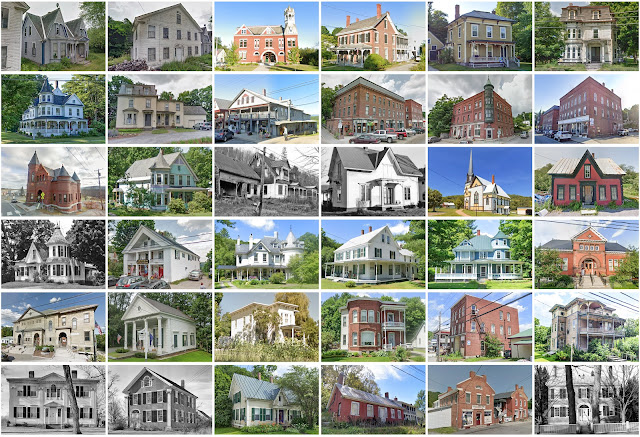
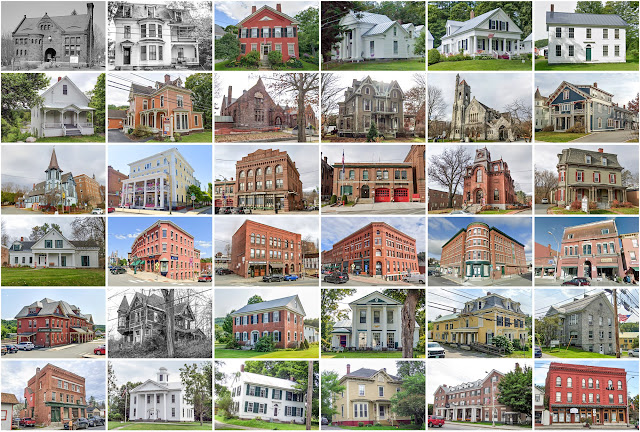
Orange County, Vermont

Image
Founding:  1781 Parent county:  Cumberland Namesake:  William of Orange, English king Seat:  Chelsea (1781–) Land area:  687 square miles Population (2020):  29,277 Population (historic):  10,526 (1790); 27,873 (1840); 23,090 (1870); 19,313 (1900); 16,694 (1930) Periods of population growth:  pre-1790–1810; 1820–1840; 1870s; 1930s; 1960–2020 Subdivisions:  Four villages; five CDPs; 17 towns Pre-1940 residences (estimated):  4,200 (28%) Pre-1940 housing survival rate:  85.2% Pre-1860 housing survival rate (1940):  42.3% Farm housing in disrepair (1950):  12.5% Nonfarm housing in disrepair (1950):  9.3% Average farmhouse value (1930):  $1,252 Average outbuilding value (1930):  $1,001 Average farmhouse size (1940):  7.5 rooms Number of farms (1920):  2,687 Average farm size (1920):  46.1 acres _________________________________________________________________________________ ...

Franklin County, Vermont

Image
Founding:  1796 (declared in 1792) Parent county:  Chittenden Namesake:  Benjamin Franklin, Founding Father Seat:  St. Albans (1796–) Land area:  634 square miles Population (2020):  49,946 Population (historic):  8,282 (1800); 24,531 (1840); 30,291 (1870); 30,198 (1900); 29,975 (1930) Periods of population growth:  pre-1800–1830; 1840s; 1860s; 1890s; 1910s; 1940s; 1960–2020 Subdivisions:  One city; two villages; five CDPs; 14 towns Pre-1940 residences (estimated):  5,708 (24.3%) Pre-1940 housing survival rate:  75% Pre-1860 housing survival rate (1940):  36.9% Farm housing in disrepair (1950):  11% Nonfarm housing in disrepair (1950):  7.6% Average farmhouse value (1930):  $1,800 Average outbuilding value (1930):  $2,096 Average farmhouse size (1940):  7.7 rooms Number of farms (1920):  2,444 Average farm size (1920):  61.5 acres ___________________________________________...

Orleans County, Vermont

Image
Founding:  1799 (declared in 1792) Parent counties:  Chittenden and Orange Namesake:  Orléans, France Seat:  Brownington (1799–1816); Irasburg (1816–1886); Newport (1886–) Land area:  693 square miles Population (2020):  27,393 Population (historic):  1,439 (1800); 13,634 (1840); 21,035 (1870); 22,024 (1900); 23,036 (1930) Periods of population growth:  pre-1800–1880; 1900–1920; 1970–2020 Subdivisions:  One city; six villages; eight CDPs; 18 towns Pre-1940 residences (estimated):  3,904 (23.8%) Pre-1940 housing survival rate:  74% Pre-1860 housing survival rate (1940):  25.6% Farm housing in disrepair (1950):  19.6% Nonfarm housing in disrepair (1950):  11.4% Average farmhouse value (1930):  $1,651 Average outbuilding value (1930):  $1,646 Average farmhouse size (1940):  7.5 rooms Number of farms (1920):  2,543 Average farm size (1920):  68.3 acres _________________________...

Addison County, Vermont

Image
Founding:  1785 Parent county:  Rutland Namesake:  Joseph Addison, English writer Seat:  Middlebury (1785–) Land area:  766 square miles Population (2020):  37,363 Population (historic):  6,420 (1790); 23,583 (1840); 23,484 (1870); 21,912 (1900); 17,952 (1930) Periods of population growth:  pre-1790–1830; 1840s; 1870s; 1940–2020 Subdivisions:  One city; six CDPs; 22 towns Pre-1940 residences (estimated):  4,865 (27.7%) Pre-1940 housing survival rate:  88.4% Pre-1860 housing survival rate (1940):  42.3% Farm housing in disrepair (1950):  8% Nonfarm housing in disrepair (1950):  8.1% Average farmhouse value (1930):  $1,968 Average outbuilding value (1930):  $2,041 Average farmhouse size (1940):  8 rooms Number of farms (1920):  2,375 Average farm size (1920):  91.7 acres _________________________________________________________________________________   Middlebury   Namesake:  Unc...

Lamoille County, Vermont

Image
Founding:  1836 Parent counties:  Chittenden, Franklin, Orleans, and Washington Namesake:  The Lamoille River Seat:  Hyde Park (1836–) Land area:  459 square miles Population (2020):  25,945 Population (historic):  10,475 (1840); 12,311 (1860); 12,684 (1880); 12,289 (1900); 10,947 (1930) Periods of population growth:  pre-1840–1890; 1900s; 1930–1950; 1960–2020 Subdivisions:  Five villages; three CDPs; 10 towns Pre-1940 residences (estimated):  2,650 (19.2%) Pre-1940 housing survival rate:  83.8% Pre-1860 housing survival rate (1940):  34.7% Farm housing in disrepair (1950):  16.3% Nonfarm housing in disrepair (1950):  14.3% Average farmhouse value (1930):  $1,271 Average outbuilding value (1930):  $1,051 Average farmhouse size (1940):  7.6 rooms Number of farms (1920):  1,599 Average farm size (1920):  46 acres _________________________________________________________________________________ ...